

YOUR STRESS BLUEPRINT IS THE
ANCHOR BLUEPRINT
You’re the steady one. You’re reliable and nurturing. People confide in you and lean on you for support. And that’s how you thrive…being the anchor for everyone around you.
But sometimes your pattern is to care for everyone around you to the point that your own well-being is being neglected. The pattern of everyone around you taking priority can start to take a toll. Over time, you can lean towards feelings of heaviness, rumination, and even resentment for those you care the most about. You might get into worry loops, carrying your stress in your digestion.
Your next move: nourish your foundation, gently get energy moving again, and stop trying to carry it all alone.
What Your Results Say About You
You’re an Anchor, which means you’re naturally steady, supportive, and reliable.
You’re often the one who keeps things moving and holds it together for everyone else.
And because you can keep functioning, it’s easy to go beyond the moment when your system is carrying more than it has capacity for.
Here’s what’s going on beneath the surface.
You could be holding it all together for everyone else... until your body decides otherwise and you just can't continue
Stress for Anchor blueprints often looks like responsibility, mental load, and being the one who keeps everyone steady.
Anchors are incredible at meeting outer expectations, but often struggle to meet inner expectations. In other words, you show up for everyone else, even when you are running on fumes.
Over time, that can show up as:
- a heavy, stuck feeling
- low motivation or lethargy
- “why can’t I just get back on track?”
- feeling like you’re pouring into everyone except yourself which can cycle into resentment
Often putting yourself last isn’t an issue with your discipline. It’s an issue with the balance in your nervous system. Too many outputs, and not enough inputs. Learning how to prioritize micro-moments of consistent care becomes essential so that you can keep taking care of those you care about.
Your mind tries to rebalance through (over)thinking
Anchors often run repetitive thought loops when stressed. The replaying, the pre-planning, and the what ifs that are on constant stream can lead to a nervous system that never quite gets the reprieve it’s looking for. That can look like rumination and worry, overthinking at night, replaying conversations, and planning tomorrow while laying in bed.
Your system is trying to prepare, which can be really helpful. But we want to find a way to support the downshifting, so that you aren’t on overdrive all the time. Having more tools to stop the rumination cycle will allow you to come back into your body, returning to a greater state of balance.
Stress can hit your digestion and cravings first
For Anchors, stress often shows up through the gut and blood sugar imbalance. Common signs might include bloating or abdominal discomfort, cravings for sugar, white bread and pasta, energy dips through the day, especially the mid-afternoon slump, and never feeling fully rested, even if you sleep through the night. These symptoms worsen when stress is high.
Your digestive system mimics the thought patterns in your brain. It keep churning. Learning how to nourish yourself more wholly will support your entire system in down shifting while boosting nutrient absorption and energy stabilization.
Watch for these warning signs
Anchors rarely “crash” out of nowhere. It’s usually a slow build, then a tipping point.
Here are a few signs you might be edging toward that Obliger-rebellion place, where your system starts pushing back because it has been carrying too much for too long:
- You’re meeting everyone else’s needs, but your own basics are slipping. Meals get skipped, sleep gets lighter, movement disappears, and you tell yourself you’ll “catch up later.”
- Your patience is thinner than usual. You feel more irritated, short, or emotionally reactive, especially with the people you love most.
- You’re doing all the right things, but nothing feels satisfying. Even rest doesn’t feel restful because your brain is still on.
- A low-grade resentment starts to creep in. Not because you don’t care, but because you’re giving from an empty place.
- You’re craving quick comfort. Sugar, bread, scrolling, snacking at night. Your body is trying to self-soothe and stabilize.
- You feel heavy or stuck, and you can’t “think your way out.” Motivation drops and everything feels harder than it should.
- Your body starts speaking louder. Digestive discomfort, bloating, tension, headaches, fatigue, that mid-afternoon slump that hits like a wall.
If you see yourself in any of these, take it as information, not failure.
It’s a sign your system needs more inputs, more support, and more foundations.
Anchor types need the step-by-step, tried and true support to stop the spiral and help lighten your load.
Your Personalized Health Essentials Audio Playlist
This is your Health Essentials audio playlist. Through these foundations, you can start supporting your nervous system, your digestion, your hormones, mindset and more. They will help you work yourself into the equation of support, in addition to those around you.
As an Anchor, if you want the quickest shift, start with:
Nourishment → Stress Resilience → Sleep
ACCESS YOUR AUDIO PLAYLIST HEREFrom burned out and exhausted to
energized and supported
Here’s your step-by-step plan
1) Listen to your Health Essentials playlist
You’ll get the biggest results if you listen once, then repeat the one that hits the hardest.
2) Pick one Anchor-friendly action for today
Choose one:
- protein + fibre at your next meal
- 10 minute walk to get energy moving
- 3 minute “worry dump” before bed
- five slow breaths before eating
One of my favourite ways to move is through a gentle Qi Gong practice. You’ll be amazed at how grounded and energized you feel without overexertion.
3) Put your day to bed tonight
Before bed, use this template to put your day to bed. This helps get everything out of your head and onto the page. Remember, the goal isn’t to solve it, it’s to unload it.
Download it HERE4) Want a 10-day structure?
If you want me to guide you day-by-day, join me in my self-paced 10 day program for only $22
Energy Shift: Your Blueprint to Nervous System Health and Hormone Balance
Start Energy Shift5) Check your email
I’ll be dropping into your inbox with short supportive emails personalized for your blueprint. These give you even more step-by-step tools to start integrating in your daily life.
If you don’t see them, make sure to check your spam or promotions folders, mark the emails as part of your primary inbox, and add me to your contacts, so you don’t miss anything.


About Me
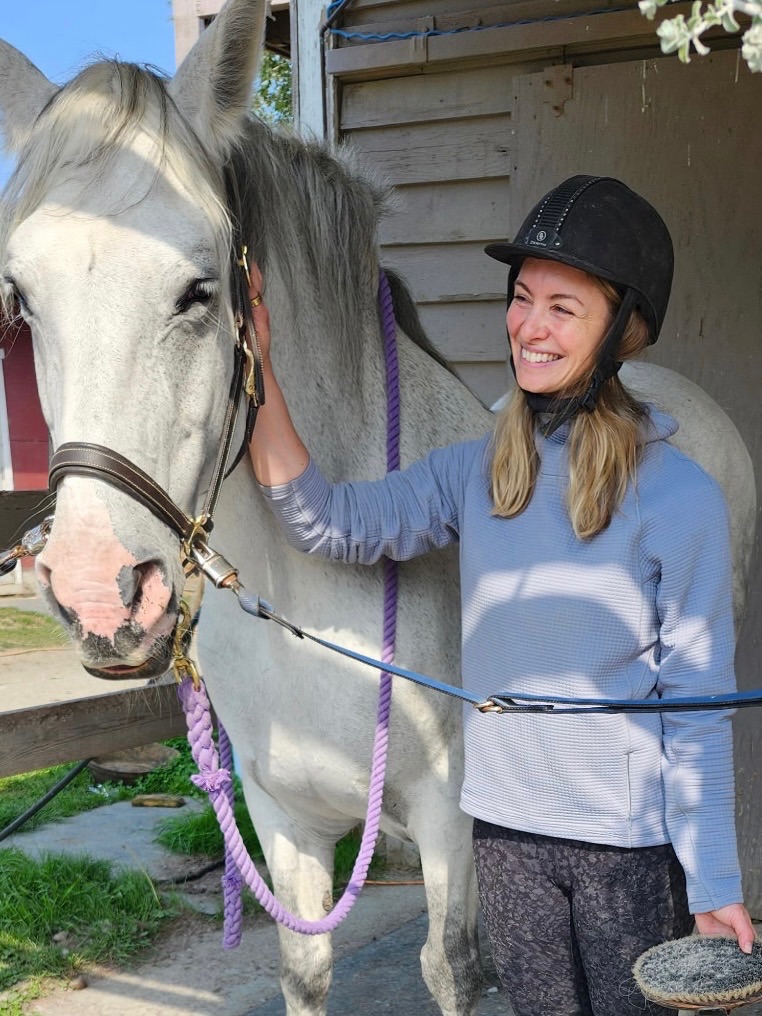
Hi, I’m Rachel.
I’m an Integrative Health Coach with a background in exercise science, health behaviour change and eastern medicine and acupuncture. My goal is to support busy women to rebalance their nervous system and hormones without giving up on your goals and ambitions. I blend western physiology with Traditional Chinese Medicine because in real life, women need both: a clear explanation for what’s happening, and tools that actually help.
My work blends western physiology with Traditional Chinese Medicine because women deserve a framework that makes sense on multiple levels. We look at what’s happening with stress hormones, blood sugar, sleep, digestion, and inflammation, and we also pay attention to patterns like energy, cycles, and the way your system responds to pressure over time. The goal is clarity and relief, not more confusion. You leave with practical and personalized tools you can actually use, even in a full and busy life.
I also come back, again and again, to the Health Essentials. The foundations. Movement, nourishment, stress resilience, sleep, and connection and alignment. Because quick fixes, fads, and trends might create a short-term spark, but they rarely create lasting change if your base is shaky. You don’t need a new protocol every week. You need consistent support that helps your nervous system feel balanced and your hormones stay supported.
I created the Stress Blueprint framework because I kept seeing the same thing. Two women can have the same symptoms and need completely different support. One person needs more movement and structure to feel steady. Another needs more rest and containment to come back into balance. Stress is not one-size-fits-all, and nervous system regulation isn’t either. Your blueprint gives us a starting point that’s personal, compassionate, and specific, so you can stop guessing and start supporting your body in a way that fits.
When I’m not helping people feel more at ease in their bodies, you can find me playing with my puppy, walking on the beach, and growing dahlias in my garden.
I’m a constant learner and always seeking to grow personally and professionally.
A few of my favourite things are starting kitchen dance parties, watching Grey’s Anatomy, and drinking smoothies laced with coffee.
I love living on Vancouver Island but my favourite place on earth is Osoyoos, BC. The feeling of summer in a lakeside small town brings me so much joy.
And of course, I love supporting women to understand their bodies.